
Tilde researchers
Tilde's highly committed team of researchers and experts drives innovation in advanced areas of language technologies. We put a particular focus on researching novel approaches, to bring technological development of smaller languages on pair with larger ones. We actively participate in European research projects to foster collaboration and innovation with leading universities and language technology companies across Europe.

Inguna Skadiņa, Doctor of Computer Science, Chief Scientific Officer of Tilde, has been working for over 30 years in the field of natural language processing. Her research interests include human-computer interaction, natural language understanding, the development of language resources and tools for less-resourced languages, and machine translation. She has led and participated in many national and international projects (FP5-FP7, ICT PSP, H2020, CEF and COST) related to language technology. Her current activities include participation in H2020 projects StairwAI and IntelComp, as well as several large-scale national projects. I. Skadiņa is also a professor at the University of Latvia and principal investigator at the Institute of Mathematics and Computer Science, University of Latvia. She is the author of more than 70 research papers. I. Skadiņa is a national coordinator of the CLARIN research infrastructure in Latvia, an expert of the Latvian Council of Sciences, a member of several professional organisations and committees of different scientific events related to natural language processing.
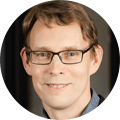
Raivis Skadiņš, Dr Comp. Sc., is the Chief Technology Officer at Tilde. He is leading the development of Tilde’s language technology products – machine translation, virtual assistants, speech technologies, proofing tools and others. R. Skadiņš has participated in FP7 projects Accurat, TTC, TaaS and MLi, ICT PSP projects LetsMT! and META-NORD, Horizon 2020 project QT21, and is currently involved in Horizon 2020 projects COMPRISE, ELG, and LYNX and several national research projects. His main research interest is machine translation. He received a Dr Comp. Sc. degree in 2012 (thesis “Combined Use of Rule-Based and Corpus-Based Methods in Machine Translation”) and is the author and a co-author of more than 40 publications.
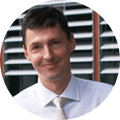
Andrejs Vasiļjevs is the co-founder and a board member of Tilde. His work involves fostering collaboration between industry and academia to advance multilingual solutions across Europe. He has led the creation of the terminology portal EuroTermBank and the machine translation platform LetsMT and initiated the national language technology platform NLTP. Andrejs serves on the boards of the Multilingual Europe Technology Alliance (META-NET) and the European Big Data Value Association (BDVA), and he chairs the Knowledge Society Program Council of the Latvian National Commission for UNESCO. Andrejs earned his Ph.D. in Computer Science from the University of Latvia and has been awarded an honorary doctorate by the Academy of Sciences of Latvia. He has authored or co-authored more than 70 research papers on terminology management, machine translation, language infrastructures, and other developments in language technology.

Jurgita Kapočiutė-Dzikienė is a language technologies specialist, a senior researcher at Tilde Lithuania, and a full professor at the faculty of Informatics of Vytautas Magnus University (Kaunas, Lithuania). She defended her PhD in agent technologies for artificial intelligence in 2011. Shortly afterwards, she started her postdoc in language technologies. Internships during her postdoc at the universities in Belgium, Norway and Sweden provided an opportunity to gain knowledge working with professionals in this field. Jurgita is working on various language and speech tasks, including the bot cloud, sentiment analysis and machine translation projects. She is an editorial board member of several international journals, a program committee member of several conferences/workshops, and a co-author of more than 40 scientific publications.
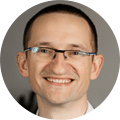
Mārcis Pinnis has received a Master’s of Philosophy Degree in Computer Speech, Text and Internet Technology from the St. Edmund’s College (University of Cambridge, Cambridge, UK) in 2009 for the thesis “An Adaptable Scientific Summarizer” and a PhD degree in Computer Science (Dr.sc.comp.) from the University of Latvia in 2015 for the thesis “Terminology Integration in Statistical Machine Translation”. He has been working at Tilde since 2011. Mārcis Pinnis has participated in the development of statistical morpho-syntactic taggers for Latvian, Lithuanian and Estonian, named entity recognition for Latvian and Lithuanian, term extraction and cross-lingual term alignment methods for European languages, information retrieval and extraction, multilingual terminology-enriched statistical machine translation, neural machine translation and many other challenging problems related to natural language processing. Before joining Tilde, he had been involved in the development of several scientific natural language processing projects in the Institute of Mathematics and Computer Science of the University of Latvia, involving a morphological analyser and synthesiser for Latvian and a speech synthesis system for Latvian. While in Tilde, he has been involved in a number of European projects, including ACCURAT, LetsMT, MultilingualWeb-LT, QT21, TaaS, and TTC, as well as several local research projects in Latvia, Lithuania, and Estonia.

Matīss has been working at Tilde since 2014. In 2019, he graduated from the University of Latvia, receiving the Doctor of Computer Science (Dr.sc.comp) degree for the thesis “Hybrid Machine Translation by Combining Multiple Machine Translation Systems”. In Tilde Matīss has worked on machine translation related problems in research projects such as “Large-scale statistical model optimization techniques for innovative technologies for machine translation”, “Linguistic Knowledge in Estonian Machine Translation”, “Neural Network Modelling for Inflected Natural Languages”, “Forest Sector Competence Centre”, as well as participated in Tilde’s submissions to the annual Conference on Machine Translation (WMT) shared tasks on news translation. Matīss has a strong publication record in various areas of machine translation. He is also a programme committee member of the main machine translation conferences. Currently, Matīss is also a postdoctoral researcher at the University of Tokyo.

Daiga Deksne graduated from the University of Latvia in 1991 by completing the Applied Mathematics program. In 2009, she received a Master’s Degree in Psychology from the Riga Teacher Training and Educational Management Academy. In 2016, she received a Master’s Degree in Philology (thesis title: “Prefixal Slang Verbs in Modern Latvian”), while in 2021, a PhD Degree in Philology (thesis title: “Semantics and Functionality of Prefixal Verbs in Latvian”) at the University of Latvia. She has been working at Tilde since 1997. Daiga has participated in the development of many language technology solutions - electronic dictionaries, Latvian and Lithuanian proofing tools, morphological analysers, syntactical parsers, machine translation solutions, virtual agents, as well as other natural language processing tools. She has participated in many national and international projects in the field of language technologies. Her research activities have led to research publications on language resources, parsing and grammar checking, machine translation, and virtual assistants.

In 2020, Toms graduated from his PhD program at Institute for Language, Cognition and Computation, School of Informatics, the University of Edinburgh (thesis title: “Methods for Morphology Learning in Low(er)-Resource Scenarios”). As a part of his thesis, Toms has authored papers on and developed state-of-the-art systems for context-sensitive lemmatisation and morphological inflexion. In 2017, Toms’ work won first place in SIGMORPHON 2017 Shared Task on morphological reinflection in 52 Languages. Prior to his doctoral studies, Toms was awarded a First Class Master’s degree with Honours in Informatics from the University of Edinburgh (thesis title: “Domain Adaptation in Low-Resource Statistical Machine Translation”). In June 2018, Toms had an internship with Tilde, where he, under the supervision of Dr M. Pinnis, worked on the document-markup translation and terminology integration in neural machine translation. A year later, Toms joined Tilde’s machine translation group as a researcher. In his research, Toms aims to work towards methods that take advantage of various levels, e.g., subword, word, sentence, document, of the underlying linguistic structure of human languages.
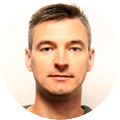
Rinalds is a researcher at Tilde and a PhD student at the University of Latvia. His main research interests are information extraction from text and anonymisation of text data. He is also part of Tilde’s data group, which is responsible for monolingual and parallel corpora collecting, cleaning and maintenance.
In 1994, Roberts graduated from the University of Latvia with a bachelor’s degree in computer science. In 1994, Roberts joined Tilde and, since then, has worked in multiple areas, from head of the Fonts Department, development of the Localisation business, and lately as head of the Language Resources unit with the Language Technology division. With the Tilde team, Roberts has participated in multiple EU-funded and other Language resources acquisition projects with the focus of creating workflows for the creation of high-quality language resources used in the development of language technologies at Tilde.

In 2022, Dāvis graduated from the master’s program in computer science at Uppsala University. His thesis, titled “Deep Learning Based Focus Interpolation for Whole Slide Images”, explored the use of deep learning to interpolate scanned microscope slide images at different focal planes, allowing for smoother zoom adjustments and reducing the required imaging time and data volume. He has been part of Tilde’s team since 2021, working on text punctuation, spoken language translation evaluation, and various text-to-speech solutions.

In 2024, Martins graduated from KTH Royal Institute of Technology with a master’s degree in computer science, specialising in machine learning. His thesis, titled “‘Harvesting targeted speech data from highly expressive found spontaneous speech by learning speaker representations'”, explored the speaker verification task in a low-resource, single-channel mixed audio scenario. For his bachelor’s thesis, Martins participated in design synthesis for a very low Earth orbit satellite. In 2020, Martins joined Tilde and worked on text-to-speech (TTS) solutions. Since 2021, he has been part of Tilde’s research team, focusing on automatic speech recognition (ASR) research and development. More recently, his focus has shifted towards the development of large language models.
Ervīns graduated from Riga Technical University in 2025 with a Bachelor’s degree in Computer Systems. His thesis, titled “Prompt Injection Vulnerabilities in Large Language Models and Their Mitigation Strategies”, explored the security of applications integrated with large language models (LLMs). He joined Tilde in 2025 and currently works on LLM research, evaluation, and fine-tuning, as well as the development of LLM-based solutions.
Former Researchers

Artūrs’ interest in natural language processing developed from the NLP seminars at the University of Latvia. This interest grew into a bachelor’s thesis and publication at the annual Fifth Conference on Machine Translation (WMT). Artūrs joined the Tilde machine translation research group in 2020. He worked on developing text and speech-based machine translation solutions for European languages. He continued his studies at the University of Latvia (Mg. comp. sc) and worked on his master’s thesis on machine translation supervised by Tilde.
Rihards Krišlauks was a researcher and a developer at Tilde in the machine translation group. He had a strong background in computer science and machine learning. Rihards played a key role in creating state-of-the-art neural machine translation systems for Baltic languages and worked on solutions for language data processing in various parts of Tilde’s machine translation pipeline. He was involved in several national and international research projects. Rihards’ academic interests were closely related to machine learning and applications of neural networks. His previous academic efforts were in the field of formal language theory.

Valters Šics was a lead developer in the Tilde machine translation group. He graduated from the University of Latvia in 2009 and received a Master’s Degree in Computer Science. Valters joined Tilde in 2004. He participated in several national and international projects such as LetsMT! (ICT-PSP), developing a cloud-based machine translation platform and machine translation systems for the languages of the Baltic states. Besides working on machine translation solutions, Valters was involved in the development of language technology products like dictionaries and proofreading tools.
Askars Salimbajevs joined Tilde as a researcher in 2014. His research in Tilde was devoted to the research and development of the automatic speech recognition system for Latvian and related to natural language processing tasks, where machine learning and neural network techniques are applied. He received a PhD degree in Computer Science (Dr.sc.comp.) from the University of Latvia in 2019 for the thesis “Modelling Latvian language for automatic speech recognition”. He was involved in several national and international research projects on speech processing, including current participation in the H2020 project Comprise. His research activities led to several research publications on speech recognition for less-resourced languages.

In 2023, Ingus graduated from the University of Latvia with a bachelor’s degree in mathematics. His thesis, titled “Using Neural Radiance Fields for 3D Open Set Semantic Segmentation”, explored innovative approaches within the realm of computer vision. Throughout his academic career, he contributed to three publications, which covered areas such as open set semantic image segmentation, OCR for low-resolution scrolling news tickers, and enhancing CLIP’s ability to recognise human figures. He has participated in and received awards in many international student Olympiads in STEM subjects, including the International Collegiate Programming Competition finals. He joined the company in 2024. At first, his work at Tilde centred on refining machine translation systems. Later on, his focus shifted towards the development of large language models.

Inese joined Tilde in 2013 in the field of artificial intelligence and Virtual Assistants. She was responsible for User Experience and Human-Computer interactions. Inese was an experienced bot designer and trainer, including Virtual Assistant conversation flow, design and VA knowledge. She also taught new bot trainers on the Tilde AI platform. With a Master of Arts in 3D computer-generated imaging from Kingston University, London, she also has a wealth of experience in 3D graphics and app development.